Welcome to leisuretimecigars Store!


Oct 14, 2026 / By Salvatore Buttafuoco / in Cigar Guides
So you want to smoke your first premium cigar. Maybe a friend handed you one at a wedding, or you have been curious about the ritual for years. Either way, welcome — you are about to discover one of the most relaxing and rewarding hobbies out there.
The problem is that the cigar world can feel intimidating from the outside. Walk into any humidor and you are faced with hundreds of options, unfamiliar terms like "maduro" and "toro," and the quiet fear of picking the wrong thing. This guide to the best cigars for beginners cuts through all of that. By the end, you will know what to buy, how to smoke it, and which mistakes to skip.
Not every cigar is a good first cigar. Here is what to look for when you are just starting out.
Cigar strength refers to the nicotine content and overall intensity of the smoke. As a beginner, your palate is not used to cigar tobacco yet, and jumping straight into a full-bodied powerhouse will overwhelm you — and probably make you dizzy.
Start with mild or mild-to-medium cigars. These are smoother, creamier, and far more forgiving. You can always work your way up to stronger blends as your palate develops. There is no badge of honor in suffering through a cigar that is too strong for you.
Cigar sizes have names — robusto, toro, corona, churchill — and they matter. A good first cigar is a robusto (roughly 5 inches by 50 ring gauge) or a corona (around 5.5 by 44). These typically take 45 minutes to an hour to smoke — plenty for a first outing. Save the two-hour churchills for later.
A well-made cigar draws easily, burns evenly, and does not fall apart in your hand. Stick with established, reputable brands — they have quality control standards that budget bundles often lack. A poorly constructed cigar can turn a beginner off the hobby entirely, and it will not be the tobacco's fault.
Here are the kinds of cigars that experienced smokers consistently recommend to newcomers. All are available in mild or medium profiles that will not punish a new palate.
If there is a textbook beginner cigar, the AVO Classic is a strong candidate. Wrapped in a golden Connecticut Shade leaf, it delivers a mild-to-medium smoke with creamy, smooth notes and an easy draw. It is the kind of cigar that lets you focus on the ritual — the cut, the light, the slow pace — without the tobacco fighting you. For your very first premium cigar, this is an excellent place to start.
Once you have smoked a few mild cigars and want to explore a little more character, the Rocky Patel Vintage 1992 is a natural next step. It sits in the medium range with an Ecuadorian Sumatra wrapper that adds a touch of spice and richness without crossing into heavy territory. It is a great illustration of how much flavor a cigar can have while still being completely approachable.
Arturo Fuente has built its reputation on consistency and craftsmanship, and its milder Connecticut-wrapped offerings are a favorite starting point for new smokers. These cigars are smooth, well-balanced, and widely available — exactly what a beginner needs while learning what they like.
Not sure which profile suits you? A cigar sampler or 5-pack lets you try several different blends without committing to a full box. Many beginners discover their preferences this way. Samplers take the guesswork out of exploring.
Before you smoke, you need to cut the cap off the head of the cigar. A straight guillotine cutter is the most common tool and the easiest to use. Place the head of the cigar in the cutter and remove just the very tip. Cut too little and the draw will be tight; cut too much and the wrapper can unravel. One clean, decisive cut is all it takes.
Forget the image of someone puffing frantically while holding a flame to the cigar. The right way to light is slower and more deliberate:
An even light is the foundation of an even burn. Rushing this step is one of the most common reasons cigars burn unevenly.
Here is the golden rule: do not inhale. Cigar smoke is meant to be savored in your mouth, not drawn into your lungs. Take a slow puff every 30 to 60 seconds, let the smoke roll across your palate, and exhale. Pay attention to the flavors — you might notice cream, cedar, nuts, coffee, or a hint of spice.
Pace yourself. Smoking too fast overheats the tobacco, which makes it taste bitter and harsh. A cigar should be a slow, relaxing experience. If the cigar goes out, that is fine — just relight it. There is no penalty for taking a break.
When you are done — or when you have smoked down to about the last third — simply set the cigar in the ashtray and let it go out on its own.
1. Starting with a full-bodied cigar. This is the number one beginner error. A strong cigar on an unprepared palate is a fast track to dizziness and a bad first impression. Start mild and work up.
2. Inhaling the smoke. Cigar smoke is much denser than cigarette smoke and is not meant for your lungs. Keep it in your mouth, taste it, and exhale.
3. Smoking too fast. Puffing like a freight train overheats the cigar and turns the flavor bitter. Slow down — a robusto should take the better part of an hour.
4. Cutting too much off the cap. A deep cut can cause the wrapper to peel. Just nip the tip.
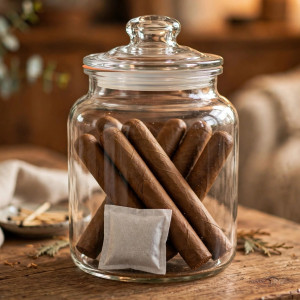
5. Storing cigars improperly. Cigars need humidity (around 65 to 72 percent) to stay fresh. Keep trial cigars in a sealed bag with a humidity pack, and consider a small humidor if the hobby sticks.
The best cigar for a beginner is a mild one from a brand you can trust, smoked slowly and without expectations. Start with something smooth like the AVO Classic, learn the ritual, and let your palate guide you from there.
Browse our selection of mild and medium cigars at Leisure Time Cigars and find your perfect first smoke. If you are not sure where to start, a sampler pack is always a safe bet.
Oct 14, 2026 by Salvatore Buttafuoco
Oct 14, 2026 by Salvatore Buttafuoco